Delonia’s Smart Mobility Analytics (SMA) project, initiated in 2022 and financed by the Ports 4.0 Fund of Puertos del Estado, has successfully completed its deadlines and results. This solution, which won a public tender, represents a significant step forward in terms of innovation in the port sector.
The challenge
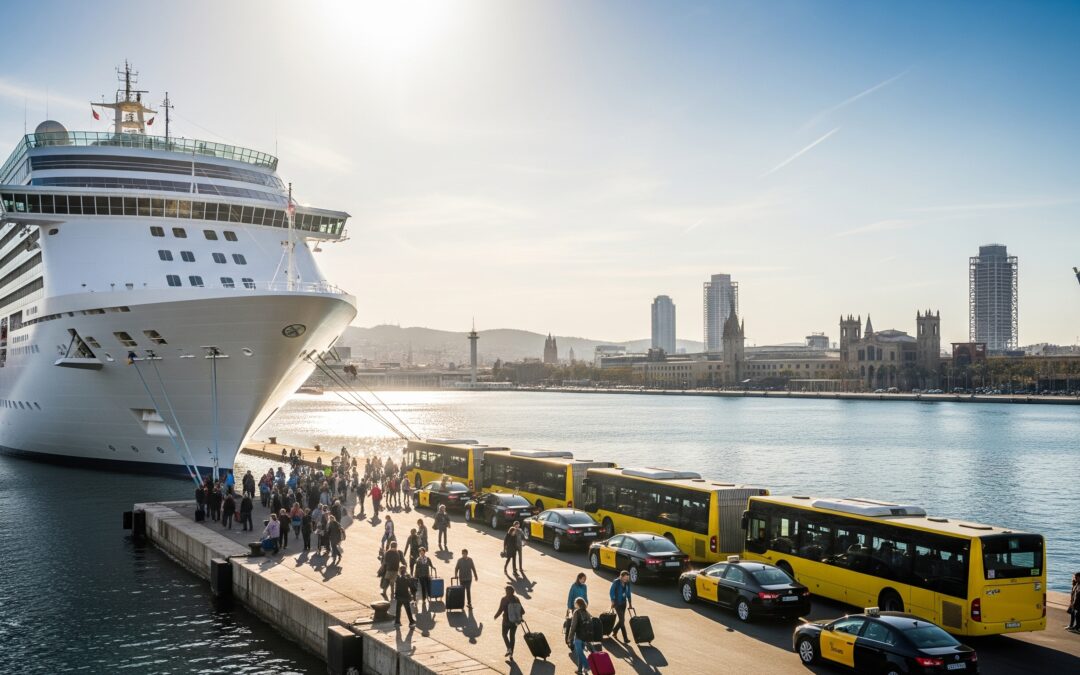
Passenger and vehicle disembarkation at marine terminals is a logistical challenge, due to the high concentration of people and vehicles in short periods of time. Inefficient management of this process can cause chain operational problems, negatively impact the passenger experience and affect the port environment.
To meet these challenges, port managers need accurate, real-time information. This will enable them to:
- Make the most appropriate Immediate Operational Decisions: acting promptly is crucial for the reduction of waiting times. It involves constant monitoring of variables such as the number of waiting passengers, the availability of parking spaces, activity flows within the terminal and the waiting times associated with each process. The availability of this data allows proactive operational adjustments to be implemented.
- Promote Advance Strategic Planning: Efficient space and service planning is imperative and must be tailored to the specific characteristics of each vessel. In this context, a solution such as SMA is positioned as a valuable resource, as it will provide reliable information and accurate forecasts by integrating external data sources, such as weather conditions, cruise typologies and complementary transportation services. This integration allows for proper resource allocation and complete preparedness.
- Identify and Mitigate Bottlenecks: The ability to proactively identify bottlenecks in waiting and parking areas is critical. Through detailed analysis of queues, patterns of accumulation are detected which, once understood, allow improvements to be implemented in the design and configuration of existing infrastructures. This methodology ensures a constant optimization of the operational flow, as well as greater process efficiency.
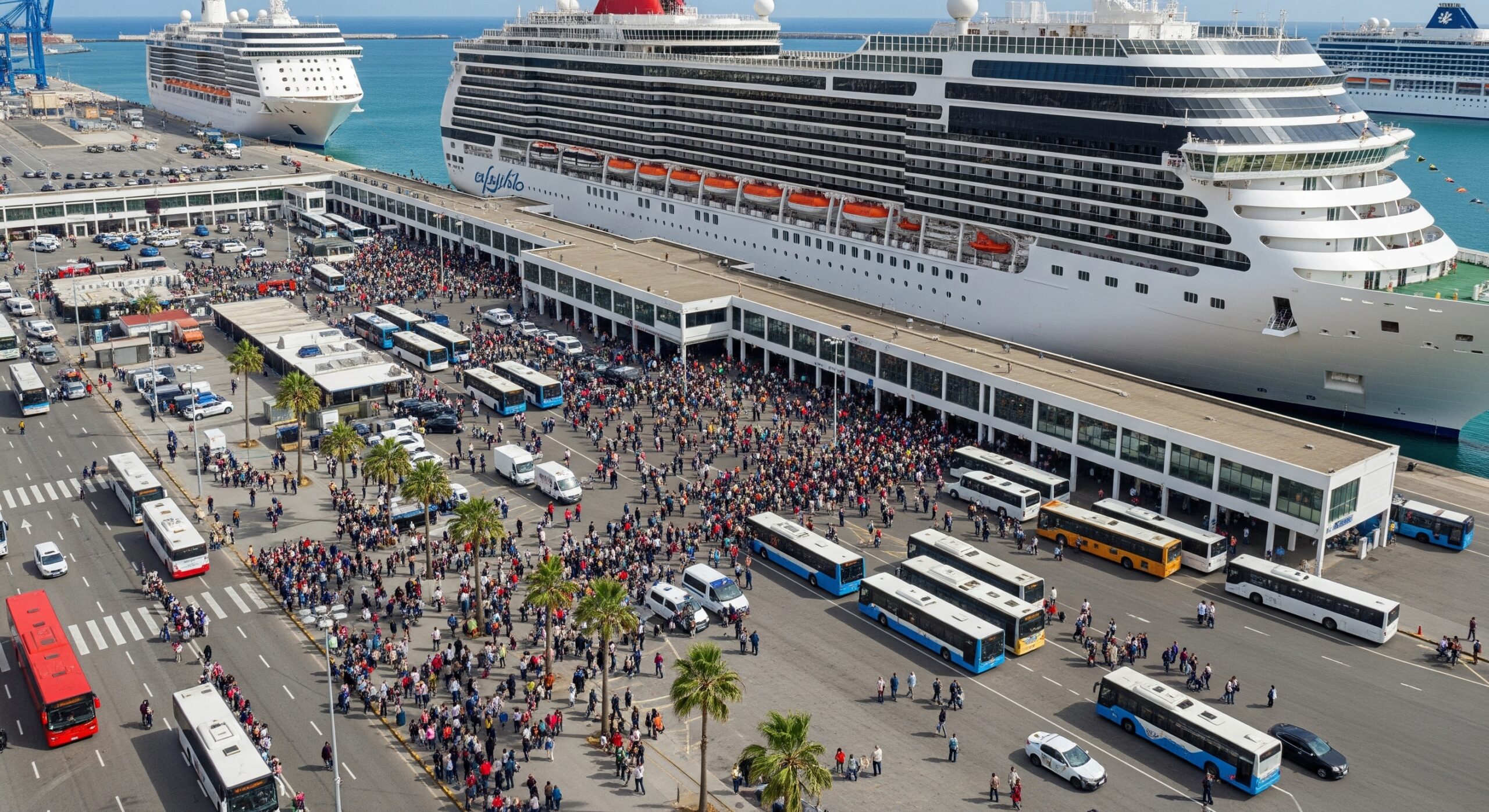
Effective management of landing operations depends on the availability and analysis of real-time data. It enables quick decisions, accurate planning and constant optimization of the infrastructure.
The solution
Smart Mobility Analytics (SMA), a solution developed by Delonia, uses artificial intelligence and image analysis to measure and manage mobility in cruise terminals. It provides real-time information to mobility agents, passengers and carriers, optimizing decisions and operations with a minimal camera infrastructure thanks to advanced neural network algorithms.
The project was structured in five interconnected work packages (WP) designed to address specific aspects of the system:
- PT1 (Capture and Edge Computing Infrastructure): implemented the camera system and its management, including devices for local intelligent analysis.
- PT2 (Advanced Artificial Intelligence Development): developed and optimized artificial intelligence models for real-time object detection, recognition and tracking, adapted to both server and local device computing environments.
- PT3 (Cloud Data and Processing Platform): developed the technological infrastructure for real-time data processing using Kafka and Druid, enabling the connection of sensors, data storage, calculation of metrics and efficient access to information.
- PT4 (Development of Applications and User Interfaces): created the final web and mobile applications for managers, cab drivers and passengers, integrated with the data platform.
- PT5 (Integration, Deployment and Final Validation): gathered all the components, deployed and validated the SMA system in real conditions in the ports of Barcelona and Algeciras, guaranteeing its stability and efficiency for its commercialization as SaaS.
The results
The Smart Mobility Analytics (SMA) platform offers significant benefits for the operational optimization and economic efficiency of ports:
- Real-time visibility of key metrics, such as parking occupancy and queue density, for proactive decision making.
- Scalability and efficient expansion, facilitating the integration of new areas through the configuration of virtual cameras and sensors.
- Advance planning thanks to the analysis of historical data stored in its datalake (Druid), which feeds forecasting models.
- Cost optimization through an OPEX model (Software as a Service – SaaS), eliminating large initial investments in hardware (CAPEX).
Surveys and technical demonstrations have been carried out in the Port Authorities of Algeciras (APBA) and Barcelona (APB). The purpose was to validate the proposed technical solution. These actions included integration, operational deployment and final validation of the SMA system in real conditions. The SMA intelligent system proves its efficiency: successfully validated in two different port environments, it stands out for its stability, accuracy and performance in the management of flows in maritime terminals.