1. Digital Health Care Providers.
One of the biggest challenges in implementing the Digital Health Model we propose is the low level of digital awareness among many of those responsible for the service—that is, the providers and practitioners who care for patients.
To implement these digital models, it is necessary to have the appropriate technological capabilities, but it also requires a digital culture and the willingness and determination to implement and promote these models.
We will describe the tools that would be needed and some of the key points in this process of digitizing supplier and service provider networks. There are three preliminary considerations to keep in mind:
1.1. Differences between a supplier and a service provider.
A distinction must be made between a service provider and a healthcare provider. The service provider is the entity that ensures the contractual and administrative aspects of the service. The healthcare provider is the accredited professional who performs the service and ensures its technical and clinical standards. In many cases, the service provider and the healthcare provider are one and the same.
1.2. Channels for providing services.
A single service provider may use different channels or methods to offer and deliver its services: online, in person, on-site, etc.
Each service channel has its own operational and financial conditions, as well as its own specific tools. In a digital system, it must be possible to set different costs and prices for a service depending on how it is provided or the channel used to provide it.
1.3. Single repository of information.
An omnichannel approach must be implemented to ensure continuity in service delivery (continuity of care) regardless of the channel. To achieve this, all channels must share the same information to ensure the continuity of the care process.

2. Integration with insurance company portals and online marketplaces.
New digital service providers must develop systems designed to integrate with their corporate clients. These clients range from insurance companies to online service portals and marketplaces. Since they essentially sell services rather than products, they must implement digital processes for the sale and subsequent rollout of the service, covering its three basic phases: execution, monitoring, and reporting.
2.1. Stages of this digitization process
This digitization process involves at least three main stages:
A. Service Request. Includes:
- Information about the service (related content)
- Professional Profile
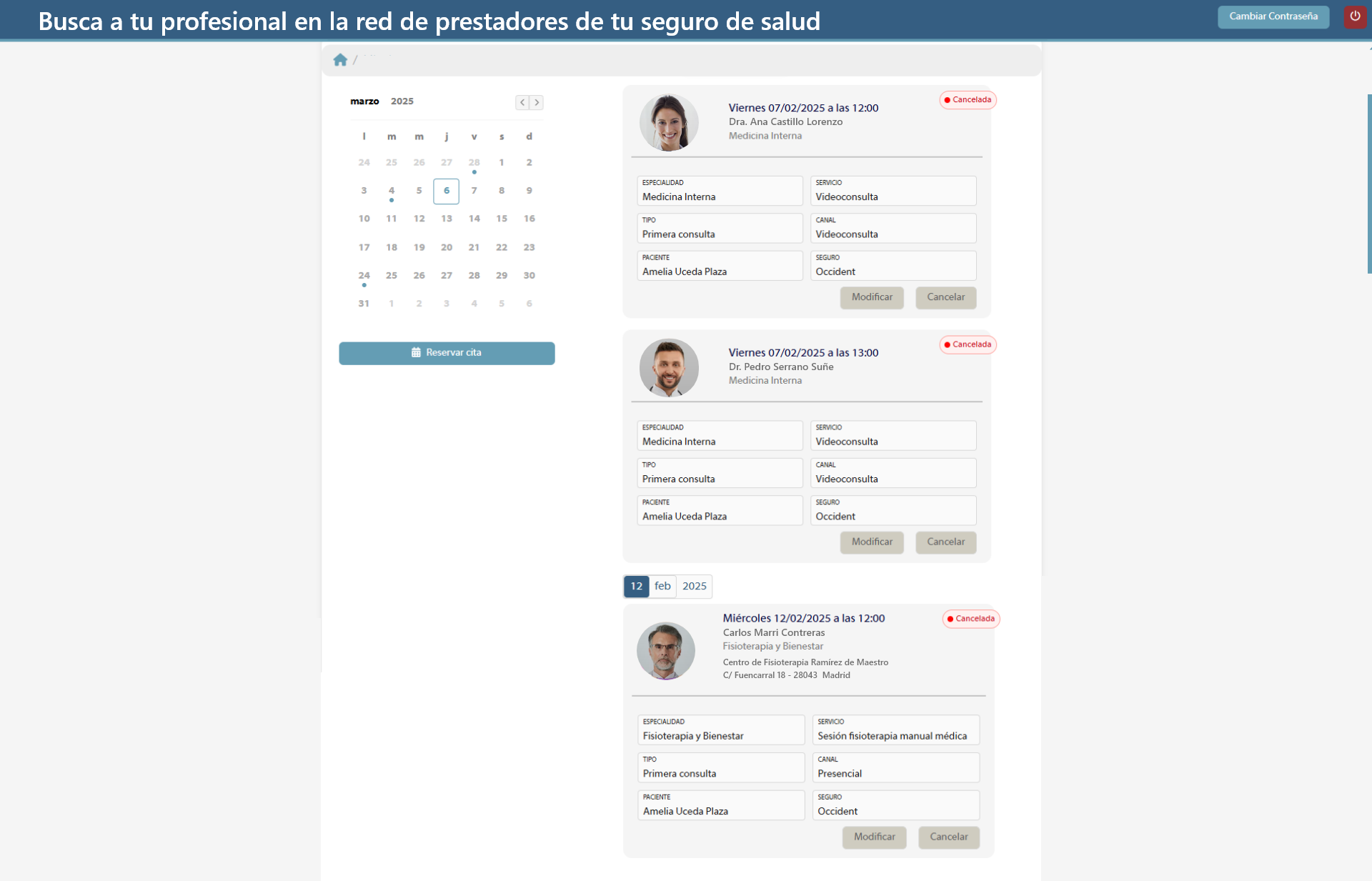
- Signing up for it online, with an online appointment
- If payment for the service is required (payment gateway and/or authorization process).
B. Provision of the service (online or in person); if online, the system must have the capacity both to diagnose and provide the service (video consultation) and to prescribe other services and/or treatments (prescription repository).
C. Digital reporting of services provided (digital CMBD for Asitencoa) and billing and settlement of those services, as applicable
To implement these features, the provider must have a Web Services platform and the ability to integrate with the various systems of its corporate clients. This involves integration with the Private Areas of end customers, corporate clients, and suppliers.
In this context, special attention must be paid to identification and login processes, which can sometimes hinder access for end users. It is essential to ensure secure access by avoiding complicated or redundant registration and identification processes. Standardization and single sign-on must be a priority, without neglecting the robust security of certificates and identifiers.
2.2. Basic Features of the Service Platform
The basic features of the service delivery platform would include:
A. Service Request/Submission (Marketplace).
a. Semantic search engine.
b. Online appointment scheduling.
c. Service portfolio specific to each channel or service point.
d. Content manager for service-related content.
e. Enhanced profile for the facility/professional.
f. Payment gateway/external authorizing center
g. Real-time information on service status (e.g., wait time in the online emergency room).
h. User reviews.
B. Provision of the service.
a. Video consultation/chat
b. Ordering tests/treatments/electronic prescriptions
c. Referrals to other services
d. Online monitoring
C. Report service information.
a. CMBD for Client Personal History.
b. Prescription registry (repository)
c. Information for billing/invoicing
d. Service evaluation.
3. Digital provider networks.
When discussing professional networks—whether in the healthcare field or any other sector—most of the time such a network is simply a list of those professionals along with a fee schedule or rate card, indicating fixed or maximum prices for users of that network.
This concept is redefined in the digital world.
The new digital networks of service providers have the following characteristics:
- These professionals share the same corporate culture and procedures.
- Customers and suppliers are integrated into a single platform or connected via web services.
- Customers and professionals are connected from the moment they request and accept the service.
- The professional reports the status of the service online.
- The network shares information about the services and the people who provide them.
- In addition, users rate and share their reviews of the services they receive.
It appears that in the coming years—or even months—a significant number of websites and apps from financially sound companies will emerge, offering their extensive customer bases a variety of additional services. These additional services will not necessarily be related to their core business, but rather will aim to provide a much more comprehensive and broad-based service to these customers. Clearly, these services will be delivered through their website or app (Marketplace).
The need for networks of digital service providers that can be integrated into these online stores will be a real opportunity, and at this point, truly digital offerings are very scarce.